
Why We’re Obsessed With Testing Our Glovebox IR Heaters
When you’re working in a glovebox, you’re usually dealing with volatile chemicals or inert gases. In that kind of environment, a heating element failing isn’t just a pain in the neck—it’s a serious safety hazard. We build our infrared heaters to handle the pressure, but the hardware is only as good as the testing we do before it leaves our doors.
We test every single tube. No exceptions.
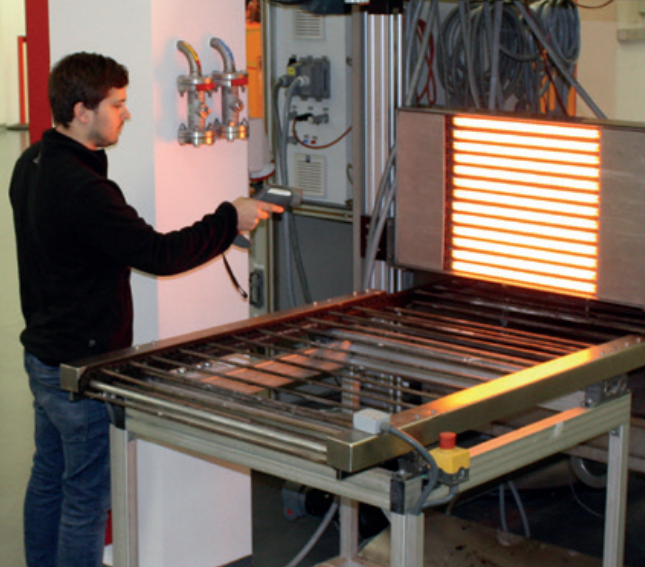
Some companies just sample a few pieces from a batch and call it a day. We don’t do that. Every single tube goes through a full withstand voltage and insulation resistance test. Here’s why: these heaters live in tight, confined spaces. A tiny, microscopic crack in the quartz or a small flaw in the filament support can let current leak. If that happens, the chassis of your expensive equipment could suddenly become energized. To stop that from happening in your lab, we push a high-voltage stress test—way beyond what the heater normally uses—right here in our factory. If there’s a weakness, we want it to fail on our watch, not yours.
The balancing act: Heat vs. Insulation
To get those fast ramp-up times you need for processing, we have to cram a lot of wattage into a small area. It’s a bit of a trade-off. That intensity puts a lot of thermal stress on the electrical connections, and high heat is notorious for eating away at insulation over time. We fight this by using reinforced seals and high-grade ceramics at the contact points. But there’s one thing you need to watch out for on your end: your wiring. Make sure your connectors and cables are rated for the actual heat near the tube. If the cabling isn’t built for that ambient temperature, your wires will melt long before the heater ever gives out.
Reliability in the real world
All this rigorous checking is designed to kill off “infant mortality”—those annoying failures that happen right after you install a new part. When you get one of our replacements, it just works. It drops right in without tripping your GFI or leaking current into the glovebox frame. You can focus on your research knowing your equipment is grounded and your team is safe.