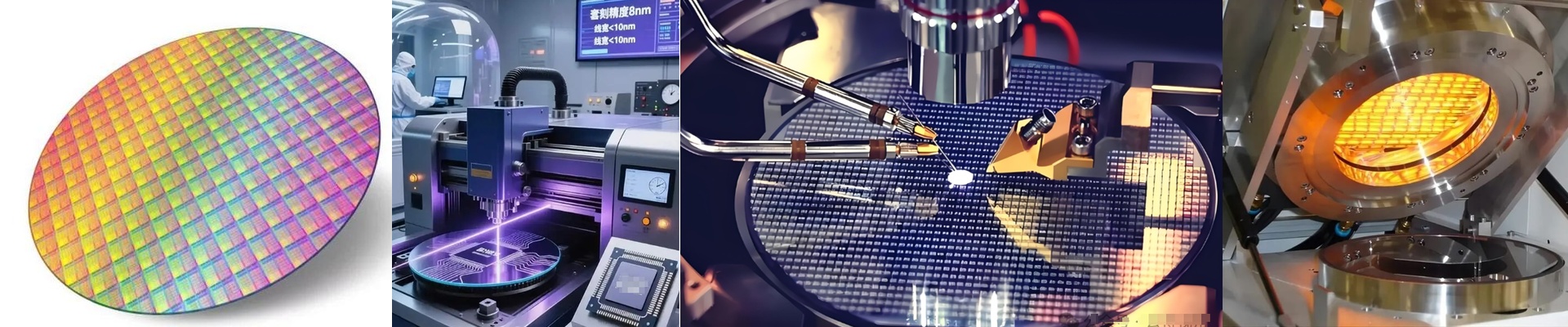


On the fab floor, photoresist bake isn’t a warm-up. It’s the hinge on the process. Let the soft bake or hard bake drift by 1.5°C and you’ll see it in CD control. Edge-bead starts creeping in. Wafers get scrapped. The vacuum oven’s heating elements have to deliver stable, repeatable heat under vacuum—without adding particles or losing uniformity. What we focus on, technically We design heating elements for vacuum ovens in lithography and photoresist processing, aiming for temperature uniformity of ±0.1°C across the wafer plane. They use short-wave infrared (NIR) quartz emitters with low thermal inertia, so ramp control is tight and the thermal budget stays disciplined. Construction is cleanroom-compatible for Class 1–100. Materials are low outgassing, and thermal cycling doesn’t generate particles. Power density is matched to the chamber geometry to avoid hot spots, and temperature repeatability holds bake after bake. Why this matters in production You need a bake profile you can trust, day after day. These elements stabilize the oven temperature profile so line-width control stays put and photoresist profiles stay consistent across lots. That means fewer reworks, yield that holds steady, and cycle times you can plan around. Energy use drops because NIR heats the wafer and chamber directly, instead of dumping heat into air that gets pumped away. Replacement intervals stretch out, too—the element design resists hot-spot degradation, so spares consumption goes down. A few practical notes The elements are engineered to meet international semiconductor equipment standards and are verified as equivalent alternatives. Installation has to match the oven’s voltage, connector interface, and mounting clearances. If the terminations don’t line up, you’ll get uneven heating. Plan a bake-out and vacuum conditioning cycle after install. That drives off residual moisture and settles the baseline repeatability.