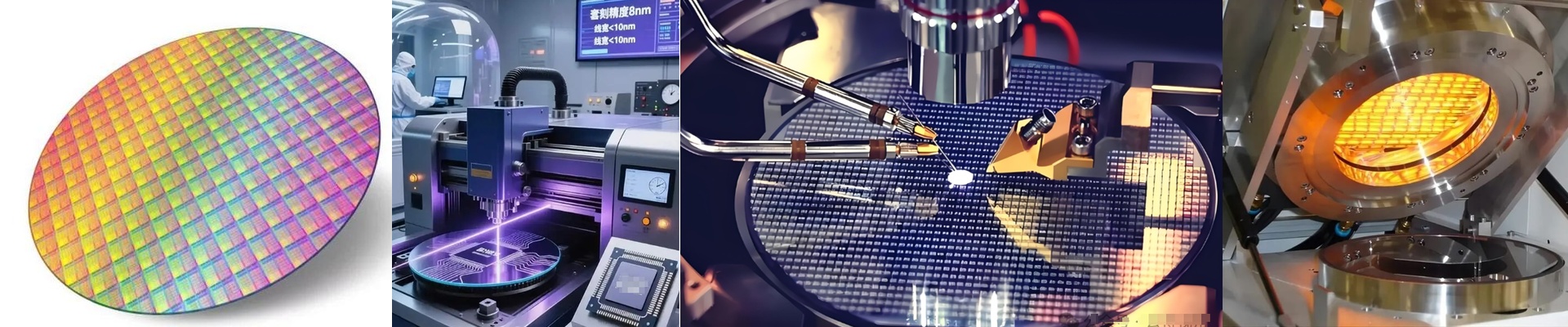

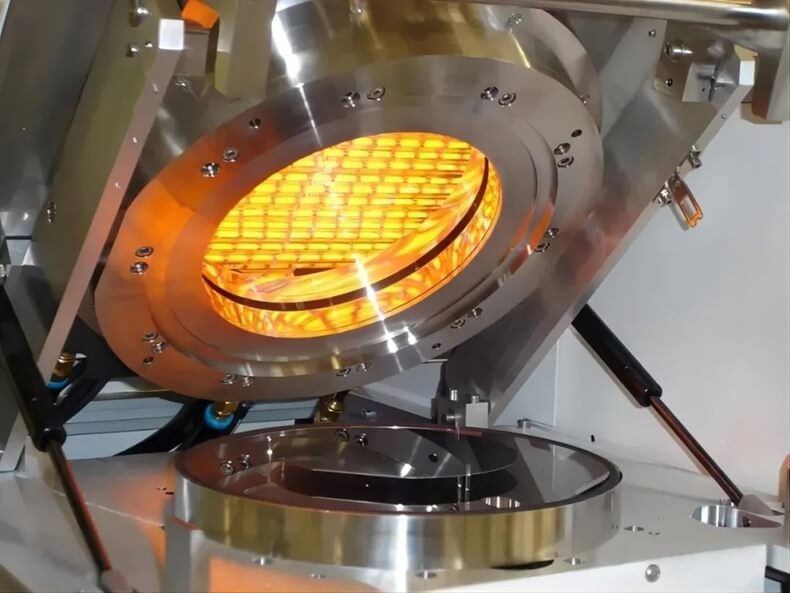
On the floor, 2.5D/3D IC packaging doesn’t leave room for thermal drift. One cold spot across the underfill cure or reflow zone, and you’re staring down voids, interconnect delamination, and scrap that cost you a full wafer’s worth. We built our 2.5D/3D IC packaging heater for exactly that reality: wafer-level uniformity held within ±0.1°C across the active surface, so every die gets the same thermal budget, cycle after cycle. Here’s what actually matters: control you can audit. We pair a short-wave infrared emitter array with a quartz-based thermal module and closed-loop pyrometry, so you get fast settling and stable setpoints even through rapid temperature transitions. The system runs in cleanroom Class 1–100, and it’s engineered for zero particle generation—no outgassing, no flaking, no contamination landing on photoresist or bump structures. In production, that means predictable bake profiles for soft bake and hard bake, repeatable cure temperatures for underfill, and reflow stability that keeps yield in the high single digits. The reason it works is straightforward: it pulls thermal variability out of the process variables you wrestle with every shift. You get tighter critical dimension control in lithography-linked steps, fewer rework lots, and consistent adhesion in the subsequent packaging operations. Energy use drops because the heater hits setpoint fast and holds it without overshoot, and uptime improves with components rated for 24/7 operation. One practical heads-up: to keep that ±0.1°C uniformity, you need a matched thermal interface to the chuck or stage, plus clean, properly calibrated sensor placement. Plan a short commissioning run to lock the profile down against your specific substrate stack.