
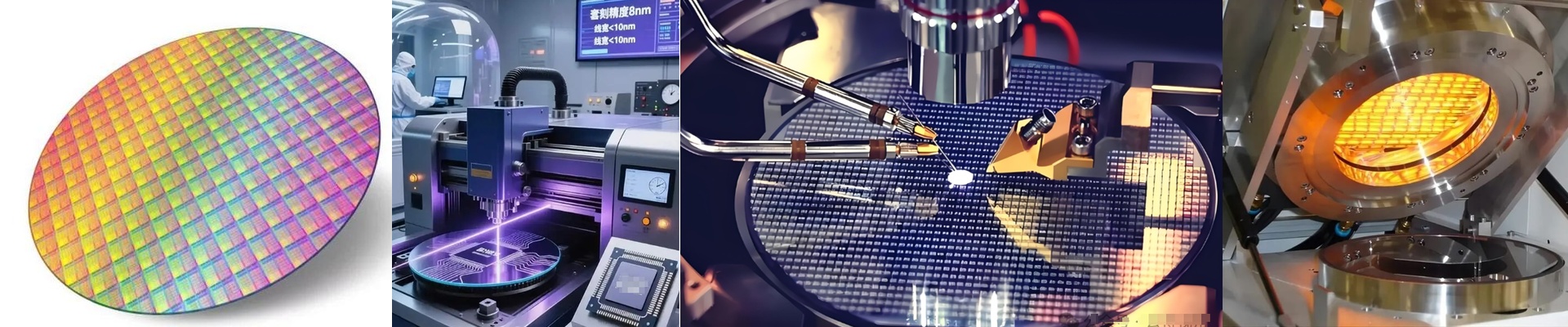
We built this Lam Research heater replacement to handle the same intense heat demands as advanced wafer processing. The whole point? Keeping your temperature locked on target, cycle after cycle, with no drift—staying within 0.1°C. When your process window is measured in nanometers, temperature swings aren’t just a “tolerance.” They’re the difference between good wafers and wasted time.
Power, Voltage, and Fit: Keeping It Tight
We spec these replacement heaters to deliver a lot of heat in a small footprint. The 400V input is there for a reason: it lowers the current on the line, which cuts resistive losses in the wiring and helps keep terminal temperatures steady. That matters when modules are stacked close together and space is at a premium. Wattage is matched to the original chamber load, so the PID loop doesn’t have to hunt for the setpoint. And the tube length and diameter are engineered to mirror the chamber geometry, so the hot zone lands exactly where the process expects it. In practice, that means repeatable ramp-up behavior—no need to re-tune the whole station.
What’s Inside: Halogen, Quartz, Coating, and Connectors
Inside, you’ve got a halogen element running in a quartz envelope. Halogen chemistry keeps the element stable at high temps and reduces blackening over time, so output stays consistent between maintenance. The quartz body handles rapid thermal cycling and resists cracking when the heat shocks come. A coated surface helps control emissivity and prevents hot spots, which improves temperature uniformity across the target zone—exactly what you need to hit that 0.1°C consistency. For install, we use proven connector interfaces like R7s and SK15. They’re made for high-temperature stations, give solid contact retention, and make for a clean, drop-in replacement—no arcing, no loose pins.
What It Means on the Floor: Semiconductor Performance, Without the Premium
This configuration is built for semiconductor chambers where uptime and repeatability are the only things that matter. You get stable temperature control, even heat distribution, and a form factor that installs just like the original. There’s a real trade-off, though: high heat density means your cooling and electrical wiring have to be up to spec. If the machine’s cooling can’t keep pace, the lamp will run hotter than designed. But when the system is properly matched, you get 0.1°C control at a cost that makes sense for high-volume fabs.