
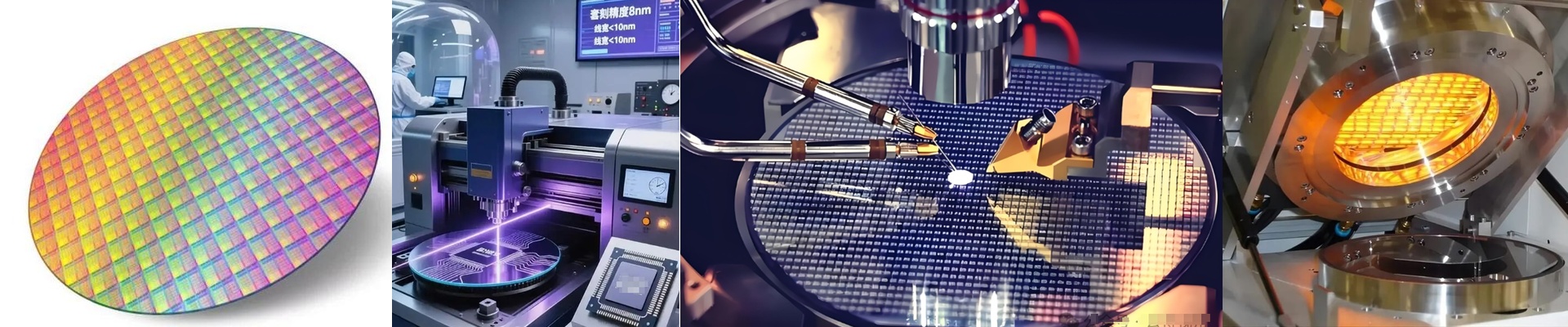
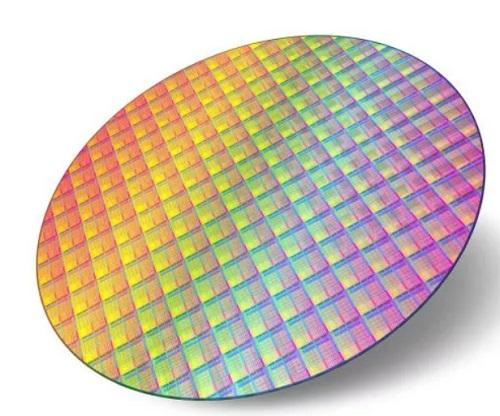
On a 300mm line, a half-degree drift during the photoresist bake is enough to throw linewidths off and scrap a whole lot. That’s the world we built this vacuum-compatible IR heater for — where thermal budget is a hard boundary and cleanroom particle counts are measured in molecules. What matters, technically We run short-wave infrared emitters in a quartz setup, coupling heat straight into the photoresist and substrate. Response is sub-second, no contact needed. Across the process zone, wafer-level uniformity holds at ±0.1°C, and lot-to-lot repeatability stays at ≤0.2°C. The heater drops into vacuum chambers and fab tools through standardized flanges, with RF/DC shielding included. It stays clean in Class 1–100 environments, generating zero particles. Temperature is closed-loop via calibrated pyrometry, and the thermal profile is traceable to NIST-referenced standards. Why it holds up in lithography In lithography, you need stable soft bake and hard bake to manage solvent removal, film stress, and CD bias. This unit locks the bake curve, which cuts CD variation and keeps yield up. Fast thermal response also shortens chamber cycle time. Vacuum compatibility removes the risk of leak-induced contamination. Energy use drops, too, because the heat is delivered on-demand instead of sitting in a big, hot mass. We’ve seen units run 5,000+ hours with under 5% output drop, supporting 24/7 operation with fewer PMs. What you need to know up front Installation comes down to line-of-sight alignment to the wafer and getting emissivity right for your stack. Glass carriers, BARC, and anti-reflective coatings all change thermal coupling. This isn’t a plug-and-play add-on for every platform. You’ll need a dedicated controller interface and a clean mechanical fit. Plan a short commissioning run to map the thermal profile against your recipe, then lock it into the process spec.