Why We’re Switching to IR Curing in Wafer Fab
Let’s be honest: old-school convection ovens are a drag. They’re slow, they rely on nasty chemicals, and they basically just heat up a giant box of air. We’re moving away from that. Instead, we’re leaning into Infrared (IR) curing. The big difference? IR doesn’t care about the air. It goes straight for the material. That’s why everyone is talking about it as the best way to finally go lead-free and actually eco-friendly.
Stopping the Energy Leak
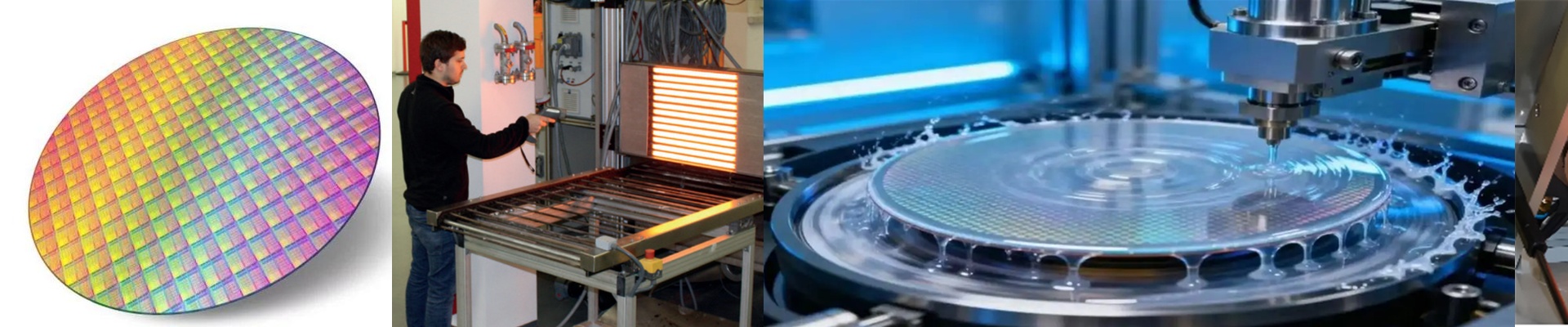
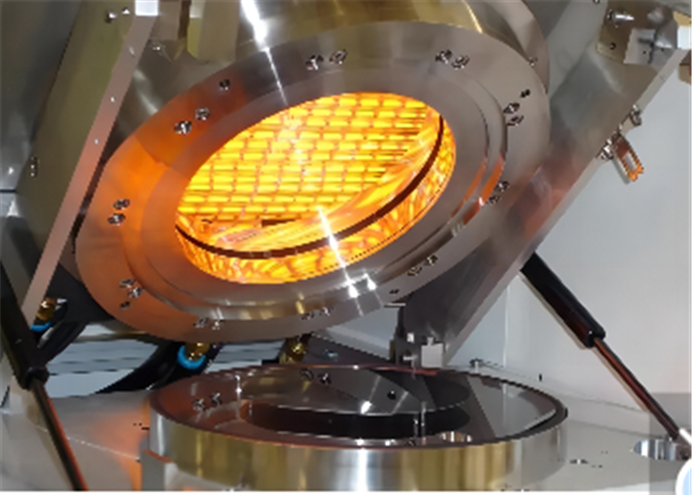
Think about a traditional forced-air oven. You’re spending a ton of money just to get the air in the room hot. It’s a waste. With IR, we use sensors and emitters to beam the electromagnetic spectrum right onto the wafer surface. Because we’re targeting the wafer and not the room, we can ditch those solvent-based accelerators—the ones filled with lead and other stuff you really don’t want breathing in. Your thermal footprint stays tight. Since the heat isn’t just hanging around in the air, your facility’s HVAC doesn’t have to work overtime to cool everything back down. It’s just… cleaner.
The Lead-Free Struggle
If you’re working with lead-free solder or polymers, you know the headache. You need a very specific, very fast heat profile. If you ramp up too slowly, you get intermetallic growth, and suddenly your joints are ruined. IR lets us hit that target temperature in a matter of seconds. But you can’t just “set it and forget it.” We use precision IR sensors to watch the wafer in real-time. It’s a closed-loop system, which keeps things from overheating. If your sensor is off or poorly spec’d, you’re going to warp that wafer. You need high-accuracy pyrometry to keep everything within a $\pm 1^\circ\text{C}$ window. It’s a tight squeeze, but it’s the only way it works.
The Catch
Now, IR is fast, but it’s not magic. The biggest pain in the neck is the “edge effect.” Since the wafer is a circle, the edges tend to soak up heat faster than the center. It’s frustrating. To fix it, we have to spend time tuning the emitter array or messing with specialized reflectors to balance the heat flux. If you skip this part, you’ll end up with uneven curing across the die, and that’s a problem you don’t want.