
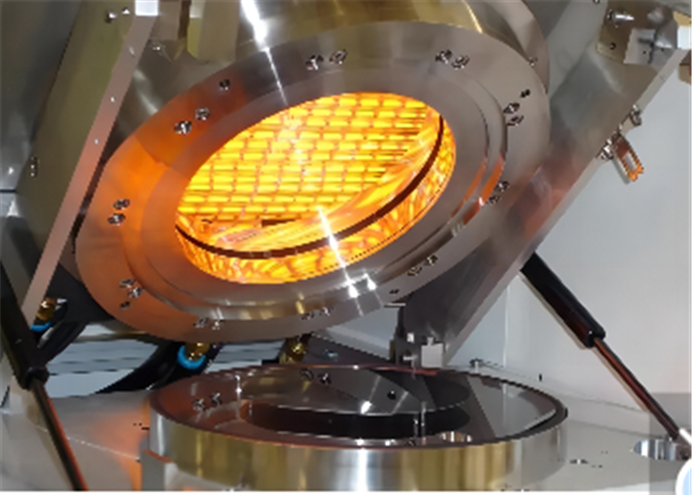
Stop Wasting Heat in Your Sensor Packaging
Let’s be honest: uncontrolled heat is a nightmare when you’re packaging semiconductor sensors. If you’re using standard IR lamps, you’ve probably noticed they just blast heat everywhere—360 degrees of energy. Most of that heat never even touches your workpiece. Instead, it hits the inner walls of your gear. Suddenly, you’ve got “hot walls.” It’s a safety risk for whoever is running the machine, and worse, that heat makes the machine frame expand, which throws everything off.
Getting the heat where it actually belongs
We handle this by switching to directional infrared. Instead of just using a bare quartz tube, we use reflectors and specific coatings to squeeze that IR energy into a tight, focused beam. Think of it like switching from a lightbulb to a flashlight. Because the beam is narrow, the energy goes straight into the substrate. You stop wasting power, and the equipment housing actually stays cool to the touch. It’s a much better way to work.
Keeping your gear (and your team) safe
When you’re setting up a heating zone, you want one thing: high heat on the part, and a cool temperature inside the cabinet. Directional lamps take the pressure off the chassis. You won’t find yourself over-spending on massive cooling fans or slapping expensive heat shields everywhere just to keep your operators from getting burned. It’s all about controlling where those photons actually go.
The catch (and how to fix it)
Now, this isn’t some magic fix that works without effort. Since you’re concentrating the beam, the intensity at the focal point is much higher. If your part is sitting too close to the emitter, you’ll end up with “hot spots” or localized overheating on the packaging. You have to get the distance just right to balance the heat. I’d suggest using a precise jig to lock in that gap so it doesn’t shift. And for heaven’s sake, pair it with a PID controller. It keeps things smooth and stops the temperature from spiking during the ramp-up.